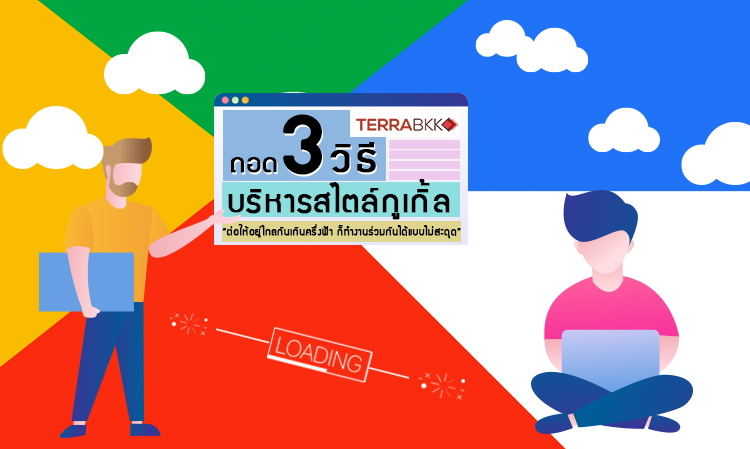
3 Ways Google Manages Remote Work: Collaborating Seamlessly Across Distances
Did you know that behind the scenes of Google, the giant search engine known as "Google" is supported by over 10,000 employees spread across 150 countries worldwide? With offices in more than 50 countries, it's not surprising that 2 out of 5 Google employees often work together even when they are in different countries or hemispheres.
Of course, an essential tool that Google uses to make their work environment feel like everyone is in the same office is technology, particularly video conferencing.
However, the challenge that arises is that even employees who meet face-to-face every day or hold in-person meetings can still experience communication breakdowns or disagreements. This becomes even more complex when team members are from different countries and cultures, yet must collaborate to achieve high productivity and seamless work.
For Google, these limitations have been overcome through strategies aimed at bridging potential gaps in relationships. This approach is not a secret; Veronica Gilrein, manager of Google's People Innovation Lab and one of the key figures in developing these strategies, has clearly explained them.
Instead of relying on assumptions, Veronica chose to gather data over two full years to survey the opinions of about 5,600 Google employees through focus groups of 100 people at a time. This culminated in three strategies that should be adapted at Google and could benefit many organizations looking to break down barriers and bring the world closer together.
1. Break the Ice Before Meetings
Knowing that distance can be a barrier between coworkers, it’s essential not to let tension build up. Instead of diving straight into work topics, take a moment before the meeting to change the atmosphere and tune the mood of both parties by greeting each other or asking about their well-being before getting down to business. If you worry that this approach might seem unprofessional or waste time, consider joining the meeting 5 minutes early to use that golden time to get to know the other party. Believe it or not, spending just a few minutes on casual conversation can create surprisingly strong connections.
2. Rotate Meeting Times
30% of Google meetings involve time zone differences of more than just 1 or 2 hours. To avoid making meetings a nightmare for one team, the best solution is to rotate meeting times. Instead of having employees from Asia wake up early for meetings all year round or forcing employees from the other side of the world to stay up late, it’s better to alternate meeting times to accommodate each time zone, ensuring everyone feels equal.
3. Use Both Verbal and Non-Verbal Communication in Meetings
The limitation of remote communication is that the other party cannot tell if you are engaged or interested while you are silent. Therefore, during video meetings, it’s acceptable to mute your microphone when not speaking to prevent background noise from disrupting the conversation. However, to show that you are still following along and care about what your conversation partner is saying, you should use body language, such as nodding in agreement, and be mindful not to cross your arms or slouch in your chair, as this can undermine professionalism.
These three simple techniques may seem superficial, but if implemented, you might find that not only does employee satisfaction improve for those working in different locations, but overall performance may also enhance significantly.